


Introduction
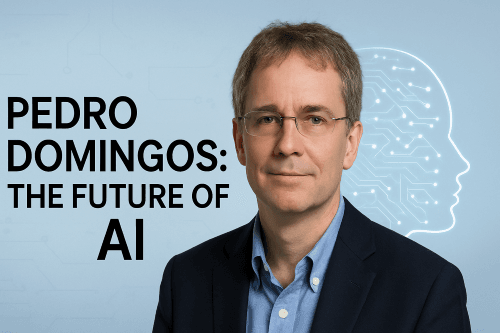
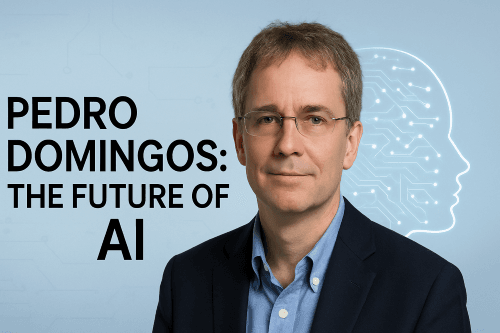
If you’ve been keeping an eye on artificial intelligence, you’ve probably come across Pedro Domingos’ AI prediction, a bold outlook on how algorithms could soon outsmart human intuition. In this post, we’ll explore what Domingos really means, why his ideas matter, and how they could reshape your understanding of AI in 2025.
Can you really trust Pedro Domingos’ AI prediction?
Domingos has earned his stripes: he’s a professor of computer science at the University of Washington, author of The Master Algorithm, and a long-time researcher in machine learning. Over decades he’s observed how algorithms evolve, and in recent years he’s made some provocative predictions about AI’s role, which arguably deserve our attention.
Here’s why you might take his forecast seriously:
- Track record in ML: He’s been at the forefront of algorithms that learn from data, so his predictions aren’t just hype.
- Data-driven reasoning: He doesn’t base his views on sci-fi; instead he uses concrete logic about computation, data, and economics.
- Real-world business implications: For example, he recently predicted that the first major tech company to be disrupted or even destroyed by AI is imminent. The Times of India
That said—no prediction is 100% certain. What you can trust is that he draws from measurable shifts (data volume, compute power, business models). The big question becomes: What do you do with his prediction?
What Is Pedro Domingos AI Prediction?
If you strip away the jargon, Domingos’ prediction can be summarised like this:
“As data and compute costs fall, intelligence becomes cheaper, and businesses or systems built on old cost structures will fail. The winners will be those that turn intelligence into scale and adaptability.”
Let’s unpack how that works in practical terms:
Key fundamentals
- Data is growing exponentially: More sensors, more interactions, more digital footprints means more raw fuel for AI.
- Compute power keeps improving: Following roughly Moore’s Law (and then some via specialised chips), compute per dollar is better than ever.
- Algorithms improve: Better architectures (deep learning, reinforcement learning, evolving systems) mean we solve harder problems.
- Intelligence becomes a commodity: If intelligence (rather than just effort) becomes cheap, then scaling across many users or many tasks is possible.
How it plays out
- Step 1: A company leverages massive data + compute to build smart systems (for example: recommendation engines, autonomous optimisation).
- Step 2: They scale that intelligence across many users or geographies, lowering unit costs and raising barriers to entry for others.
- Step 3: Older models that rely on manual effort, fixed cost structures or limited scale struggle, they are “disrupted”.
- Step 4: New business models and roles emerge (e.g., AI-assisted professionals, data-driven platforms, self-optimising systems).
Real-world analogy
Imagine the taxi business before and after platforms like Uber: previously, the cost of each ride was largely manual and local. After the platform, scale, data and optimisation changed the cost structure. Domingos argues AI will do something similar, but across many industries.
So his “prediction” isn’t a single event; it’s a pattern. The key insight: intelligence will shift from being scarce and manual to being common and automated.
Is it safe or legal to follow this shift in intelligence?
You might wonder: is it even responsible to act on such predictions? Are there risks? Let’s talk through them.
Are there legal issues?
No specific law prohibits you from learning about AI, building with it, or using it. That said:
- Data use is regulated (e.g., GDPR in Europe, CCPA in California). You must ensure you’re handling data appropriately.
- AI models may have bias or ethical issues, so standard practices (transparency, fairness) should apply.
- For business use, you’ll need to ensure proper licensing of models, respect IP, and meet compliance.
Are there risks?
Yes. Acting too fast or with poor design can lead to:
- Security risks: If your intelligent system is hacked or misused.
- Business risks: If you build a “smart solution” but your users don’t adopt it.
- Ethical risks: If you deploy AI without considering fairness, privacy or societal impact.
But Domingos argues the bigger risk isn’t too much AI, it’s too little intelligence. Medium If you ignore the trend, you may be left behind.
So what’s the conclusion?
Yes, it’s safe (with standards) and legal; but you must be intentional. Use intelligence as a tool, not a gimmick. Follow best practices like data governance, ethic board review, and continuous learning.
How to act on Pedro Domingos’ AI prediction step-by-step
Let’s map Domingos’ idea into actions you (or your team) can actually undertake. The rest of this section breaks into practical paths:
1. Start a career in AI-enabled roles
- Shift from manual tasks to roles supervised by AI (for example: analyst + AI tool).
- Build your skills in data processing, model interpretation, and domain knowledge.
- Real-life example: A marketing analyst who uses AI to forecast customer churn , rather than crunch spreadsheets manually.
2. Offer freelance AI services
- Many businesses need help integrating intelligence, not building from scratch.
- Offer services like “AI chatbot setup”, “data-pipeline creation”, “predictive-modelling for SMEs”.
- Real-life: A freelancer sets up a chatbot for a local retailer that uses purchase data to upsell.
3. Monetise an AI skill or product
- Create small, repeatable tools that harness intelligence (e.g., automated report generator, social-media insights tool).
- Charge subscription or one-time fee, because once automated, cost per user drops.
- Real-life: An independent dev builds a “content writer assistant” which reduces manual writing time; sells to agencies.
4. Create and sell an AI-based asset
- Instead of service, build an asset (software, model, marketplace) that others use.
- The key is scale: many users, low incremental cost.
- Real-life: A startup builds a platform where micro-businesses upload their data and get predictive analytics via a standard model.
5. Use AI to boost your productivity
- Even if you’re not in tech, use intelligence to improve output: automate repetitive work, summarise data, find insights.
- Real-life: A teacher uses GPT-plug-in to create quizzes and assess student responses, saving 6+ hours per week.
6. Build or market an AI startup
- If you’re entrepreneurial, build a company around intelligence (e.g., optimisation for logistics, personalised nutrition, smart maintenance).
- Use Domingos’ trend: intelligence becomes cheap → your task is to combine domain + data + scale to create value.
- Real-life: A logistics startup uses IoT sensors + AI to optimise delivery routes automatically, outperforming traditional courier firms.
Learn AI or build a career using trusted platforms
Now that you’ve seen what’s possible, let’s talk tools and learning paths you can begin today.
- Coursera’s “Machine Learning” by Andrew Ng – a beginner-friendly start to AI fundamentals.
- edX: IBM Data Science Professional Certificate – hands-on with data and models.
- Fast.ai’s Practical Deep Learning for Coders – more advanced, model-building focus.
- Kaggle – build your portfolio by solving real problems, joining competitions.
- Try this free tool to get started: Upload a dataset and experiment with Google’s AutoML or Microsoft’s Azure AI Studio.
- Enroll in a beginner-friendly course today that emphasises productionising models (not just research).
And here’s a CTA just for you:
Get familiar with one dataset this week; build a simple predictive model in 7 days; you’ll be ahead of 80% of peers.
Conclusion
To immerse yourself in Pedro Domingos’ prediction means doing more than just watching headlines. It means preparing, acting, and adapting. Intelligence is becoming cheap, accessible and scalable, and that shifts the playing field for businesses, professionals and everyday creators alike.
Your journey with AI starts now. Choose a path, pick a tool, deploy something small, and build your edge.
Take one step today, and you’ll be riding the wave of the next era of intelligence, not getting swept away by it.
Ready to start your journey? Read our article on Building an AI Career in 2025 to take your next step
If you found this post helpful, check out more expert tips and AI-powered blogging resources on FixMyAI.in where creators and professionals stay ahead with the latest in AI and digital growth.