




Introduction
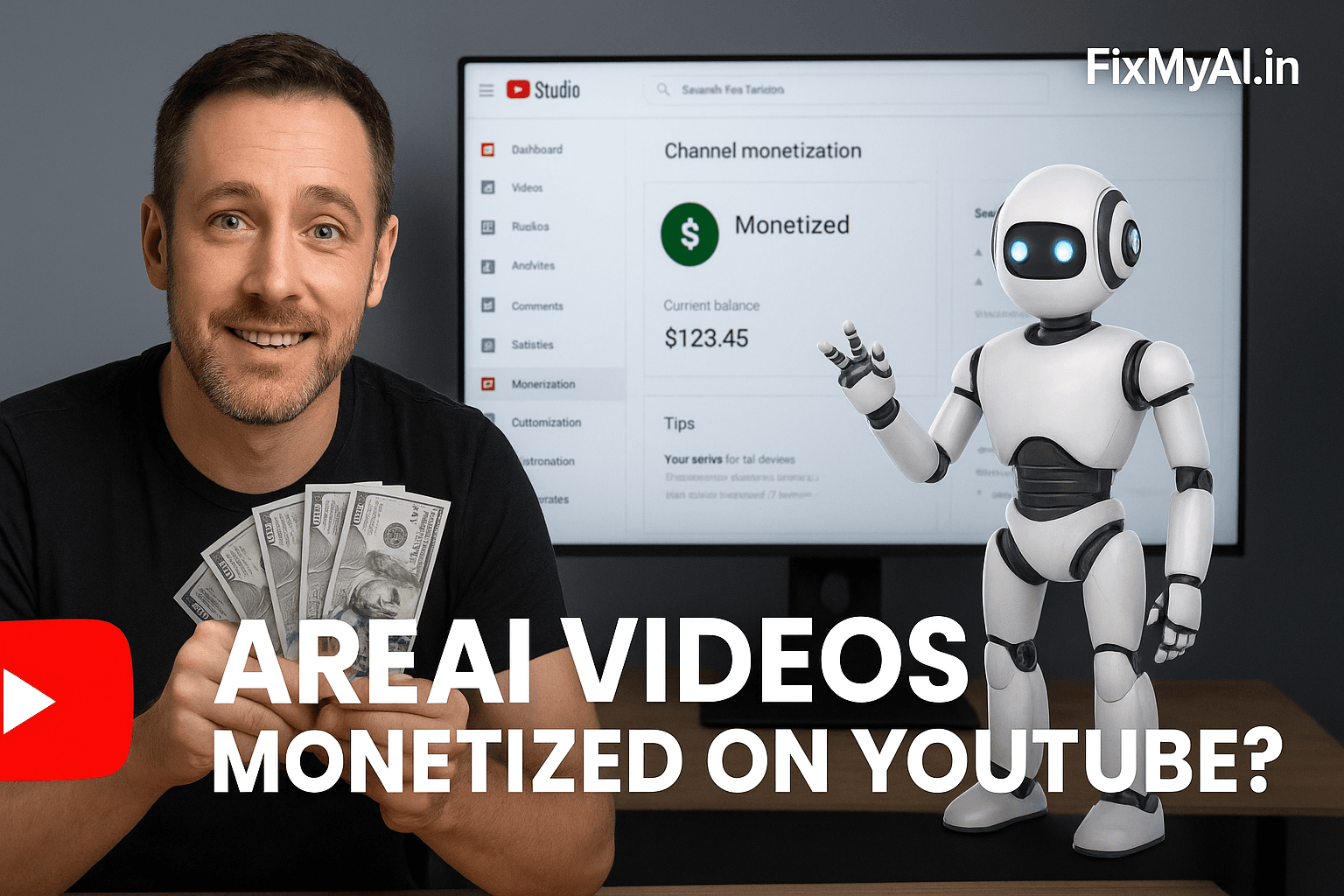
If you’ve ever wondered “Are AI videos monetized on YouTube?”, you’re not alone. With the explosion of artificial intelligence tools like ChatGPT, Pika Labs, Runway, and Sora, thousands of new creators are experimenting with AI-generated content. From AI animations and talking avatars to fully automated news channels – it seems like everyone wants a slice of the AI video revolution.
But here’s the burning question: first of all, can you actually make money from AI videos on YouTube? In other words, is monetization truly possible, or, more importantly, are there hidden restrictions you need to know about? Let’s explore this step by step.
Let’s break it down step by step. First, we’ll see how AI videos fit into YouTube’s monetization policies. Next, we’ll explore what kind of AI content gets approved and, equally important, what gets demonetized. Then, we’ll discuss practical tips on how you can stay compliant while building your channel. Finally, by understanding these rules, you can confidently create AI content without risking your monetization.
🤖 What Are AI Videos on YouTube?
AI videos refer to content created (fully or partially) using artificial intelligence tools. These tools can generate visuals, voiceovers, music, and even scripts. Common examples include:
- AI-generated faceless channels (like storytelling or motivational content)
- Text-to-video clips using tools like Pictory, Runway, Synthesia, or Lumen5
- AI animation videos made using Sora, Pika Labs, or Kaiber
- AI voice narration using realistic text-to-speech tools like ElevenLabs
- ChatGPT-based explainer videos or Q&A content
AI helps reduce production time and cost – you can literally make a high-quality video in hours instead of days. But with that speed comes one big concern: is it eligible for monetization?
💰 So, Are AI Videos Monetized on YouTube?
Yes , but with conditions.
YouTube does allow monetization of AI videos as long as they follow the platform’s original content and copyright policies.
In simple terms:
You can monetize AI-generated videos if you add significant human input, creativity, and originality.
However, purely automated or repetitive content made without value addition is not eligible for monetization.
✅ AI videos that can be monetized:
- Tutorials, explainers, or reviews where you use AI visuals but add your own narration or analysis.
- News updates or commentary using AI-generated graphics.
- Storytelling content where the script and concept are original.
- Educational or tech videos showing how to use AI tools.
❌ AI videos that cannot be monetized:
- Auto-generated content with no commentary.
- Loops or repetitive clips made by AI tools.
- Reused AI videos or voiceovers without human context.
- Deepfakes, cloned voices, or misleading visuals.
📜 YouTube’s Updated Policy on AI Content
In early 2024, YouTube announced new AI disclosure and labeling rules. The platform now requires creators to reveal when AI is used in videos , especially if it depicts realistic humans, voices, or events.
YouTube divides AI content into two main types:
- Synthetic or Altered Content – If AI changes how someone looks or speaks, you must label it as “altered or synthetic.”
- Assisted Content – If AI tools only help in video creation (like editing, visuals, or B-roll), labeling is optional.
Failing to disclose AI use can lead to age restrictions, limited monetization, or even strikes.
So, transparency isn’t optional anymore , it’s essential for staying monetized.
🧠 How YouTube Decides Monetization Eligibility
YouTube uses both automated systems and human reviewers to check if a video meets monetization standards. The main criteria include:
- Originality: Does the video show effort, creativity, or commentary?
- Value: Does it educate, entertain, or inform viewers?
- Policy compliance: Does it follow YouTube’s guidelines for reused or repetitive content?
- Advertiser friendliness: Does it avoid sensitive or controversial topics?
If your AI-generated video clearly includes your voice, opinions, or edits, you’re good.
But if your video feels like it was made by a robot , with no human storytelling or emotion , it’ll likely be flagged as reused or low-quality content.

🎥 My Experience: Getting AI Videos Monetized
When I first experimented with AI-generated videos, I was excited , but skeptical. I used tools like Runway for visuals and ElevenLabs for voiceovers to make tech explainers.
My first few uploads didn’t pass monetization because they lacked personal touch. YouTube flagged them as “reused content.”
So, I changed my strategy:
- I’ve started writing custom scripts manually instead of relying on AI generation.
- To make the videos more authentic, my own voiceovers replace synthetic voices.
- AI visuals now serve as supporting B-rolls, complementing the story rather than dominating it.
- Additionally, I’ve added on-screen commentary and smooth transitions to keep viewers engaged.
Within two weeks, YouTube approved my channel for monetization. The key? I used AI as a helper, not as a replacement for creativity.
That’s when I realized , AI tools are powerful, but they still need a human storyteller behind them.
⚙️ Tips to Monetize AI Videos Successfully
If you want your AI videos to qualify for monetization, here are proven tips:
1. Always Add Human Commentary
Even if AI makes your visuals or voice, add something personal , your insight, humor, or analysis.
2. Show Original Research or Ideas
AI can’t replicate your thought process. Explain your experience, summarize trends, or share lessons learned.
3. Avoid Reused AI Footage
Never copy clips or templates from other AI channels. Create your own combinations using different prompts or edits.
4. Add Disclosures (When Needed)
If your video contains realistic AI visuals, use YouTube’s synthetic content label to stay transparent.
5. Focus on Storytelling
A video with a clear beginning, middle, and end feels human-made , and earns trust.
6. Use Captions and On-Screen Text
They help improve watch time and make your content look professional.
7. Keep Your Branding Consistent
AI channels often lose credibility because of generic design. Add a consistent logo, voice style, or intro.
📈 What Type of AI Videos Earn the Most?
Some AI video niches perform exceptionally well for monetization. Here are top examples:
1. Educational & Explainer Videos
- “How AI Tools Can Automate Your Work”
- “Beginner’s Guide to ChatGPT”
- “AI Tools That Save Time for Students”
These videos are informative and advertiser-friendly.
2. Storytelling or Motivational AI Videos
You can use AI visuals with real stories or voiceovers. Viewers love inspiring content , and YouTube rewards engagement.
3. AI Tutorials or Reviews
Channels that show how to use AI tools (like Pika Labs, Midjourney, or Sora) get high watch time and CPM.
4. Faceless Productivity Channels
These use AI visuals with voiceovers discussing mindset, business, or tech. If done right, they’re goldmines.
⚠️ Mistakes That Get AI Videos Demonetized
Many creators unknowingly make small mistakes that ruin monetization chances. Avoid these at all costs:
- Using AI-generated voices that sound robotic or repetitive.
- Uploading content entirely made by AI with no edits.
- Not disclosing synthetic visuals (deepfake-like content).
- Reposting AI content from other channels.
- Ignoring copyrighted background music.
Remember , YouTube’s algorithm now detects repetitive AI content easily. Always mix human and AI creativity.
🔍 The Role of Copyright in AI Videos
Copyright is one of the trickiest parts of AI monetization.
Many AI models use data from copyrighted works , meaning your generated visuals might accidentally resemble something protected.
Here’s how to stay safe:
- Use commercial-use AI tools with clear licensing.
- Double-check your background music rights (use YouTube Audio Library or Epidemic Sound).
- Avoid generating content based on real people or celebrities.
- Credit AI tools used in your video description for transparency.
This builds trust and prevents takedowns or demonetization issues later.
💬 How Viewers Respond to AI Content
Interestingly, many viewers don’t mind AI visuals , as long as the story feels authentic. In fact, AI animations can make complex ideas easier to understand.
However, if viewers sense that your channel is fully automated or emotionless, they lose interest quickly.
So, think of AI as your assistant, not your replacement. You bring emotion, humor, and experience , AI brings speed and visuals.
🧩 LSI Keywords (for SEO Optimization)
To make your post and videos SEO-friendly, include these related keywords naturally:
- “AI video monetization policy”
- “YouTube AI content rules”
- “AI-generated video earnings”
- “Monetize AI-generated content”
- “Faceless AI YouTube channels”
- “AI copyright YouTube”
- “AI content disclosure policy”
These phrases help your content rank higher without keyword stuffing.
💡 Personal Lesson: What I Learned from Using AI in Content
I once made a full AI documentary using text-to-video tools, and at first, I was excited. However, it flopped. Although the visuals were beautiful, the storytelling was flat. That’s when I realized that AI lacks emotion, and consequently, YouTube’s algorithm picks up on that too.
After combining my narration, opinions, and editing style, the next version got 10x more watch time.
So yes , AI helps you create content faster. But the connection comes from you.
🚀 The Future of AI Videos and Monetization
As AI evolves, YouTube will continue refining its monetization rules. Expect:
- More accurate content detection using AI moderation tools.
- Clearer labeling requirements for synthetic content.
- Higher ad rates for trustworthy, creative AI-assisted videos.
Creators who combine human insight with AI efficiency will dominate the next wave of YouTube success.
🏁 Conclusion: Can You Monetize AI Videos on YouTube?
Absolutely , but only if you do it right.
AI videos are monetizable on YouTube when, for example, they include human creativity, commentary, and added value. In other words, YouTube rewards content that goes beyond just AI-generated material. The more you personalize your content, the more you’ll stand out from auto-generated channels.
In short:
- Use AI as a tool, not a crutch.
- Stay transparent with YouTube policies.
- Focus on originality, storytelling, and viewer engagement.
If you do that, monetization isn’t just possible , it’s sustainable.
🔔 Final Call-to-Action
Are you using AI to create videos? What tools or methods work best for you? Share your experience in the comments below or visit FixMyAI.in for more insights, guides, and automation workflows to help you grow your AI-driven YouTube channel.