


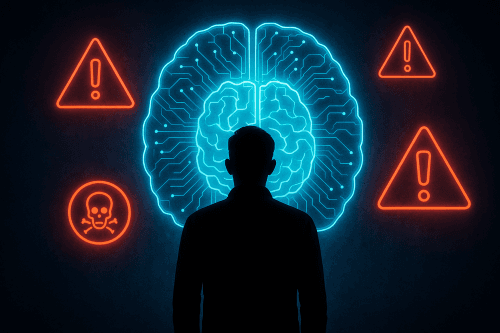
Artificial intelligence is everywhere today , from recommending your next YouTube video to writing code, diagnosing diseases, predicting markets, and even analyzing emotions. But with this rapid explosion of AI tools, one question keeps popping up everywhere: how dangerous is AI really?
This question isn’t just trending; it’s important. People want clarity. Some feel excited, some feel worried, and others are just confused. And honestly, I don’t blame them. Even in my own early days of exploring automation tools for FixMyAI.in, I often wondered if I was over-relying on systems I didn’t fully understand.
That’s why in this article, we’re breaking everything down calmly, clearly, and honestly , no fear-mongering, no over-hyping. Just real insights, real examples, and real experience.
If you’re curious about the risks behind AI, the hidden dangers, and why experts keep warning the world, keep reading , this guide will give you clarity.
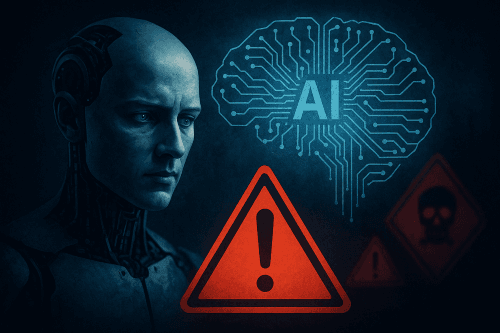
Why People Ask “How Dangerous Is AI?” in the First Place
Before diving into the risks, let’s understand why this topic feels so emotional and urgent.
Every week, a new AI model launches that feels more powerful than the last. In addition:
- AI writes text like humans
- AI creates realistic videos
- AI clones voices
- AI deepfakes faces
- AI generates images
- AI predicts behavior
AI is learning fast , sometimes too fast. And this speed naturally creates concern.
And yes… there are real dangers.
But there are also responsible solutions.
This article will explain both sides so you fully understand how dangerous is AI , without the drama.
How Dangerous Is AI? A Realistic Look at the Risks
To answer the question “how dangerous is AI?”, we must explore the different categories of danger – from misinformation to security threats and ethical concerns.
Let’s break them into the most important areas.
1. The Danger of Misinformation (Deepfakes, Fake News, and Manipulation)
One of the biggest threats is misinformation.
AI can now generate:
- Fake videos
- Fake audio
- Fake articles
- Fake social profiles
- Fake political speeches
These deepfakes are so convincing that even trained professionals sometimes fail to spot them.
Why this is dangerous:
Because misinformation destroys trust , in people, governments, media, and even relationships.
My personal experience:
A few months ago, while creating AI visuals for FixMyAI.in, I mistakenly believed a viral “AI-leaked screenshot” was real. Only after cross-checking did I realize it was entirely fake. That moment made me understand how dangerous AI-generated misinformation can be.
2. AI and Job Loss – A Silent but Serious Risk
Many people panic about AI replacing jobs, and the fear isn’t entirely wrong.
AI is already replacing:
- Data entry roles
- Copywriting
- Graphic design
- Customer support
- Basic coding
- Social media tasks
- Basic video editing
- Image generation
The danger isn’t immediate unemployment – it’s the gap created between AI-enhanced workers and traditional workers.
Why this is dangerous:
People who don’t adapt will fall behind quickly. But those who embrace AI can actually earn more and work faster.
3. AI Bias and Discrimination
AI learns from human-made data – and humans aren’t perfect.
So AI sometimes reflects:
- Gender bias
- Racial bias
- Cultural bias
- Social bias
This can lead to unfair decisions in:
- Hiring
- Banking
- Law enforcement
- Medical treatment
- Loan approvals
A real example
A hiring AI once rejected women candidates more often – because its training data included male-dominated fields. That’s how dangerous is AI when bias goes unchecked.
4. AI Privacy Risks – Your Data Is Fuel
AI models learn using your data.
They collect:
- Search history
- Personal chats
- Location patterns
- Online behavior
- Photos and voice clips
And once your data is used by an AI model, you can’t fully delete it.
This raises concerns about:
- Identity theft
- Behavioral prediction
- Personal tracking
- Targeted manipulation
This is one of the most dangerous yet invisible AI risks.
5. AI Weaponization – The Darkest Possibility
Governments and military agencies already experiment with AI-driven:
- Autonomous drones
- Automated targeting
- Cyberattacks
- Surveillance
- Robotics
- Battlefield decision systems
If AI makes a wrong decision… lives are at stake.
This is the level where researchers ask seriously:
How dangerous is AI if it gains control of critical systems?
That’s why global leaders are calling for strict AI regulation.
How Dangerous Is AI for Everyday Users?
Okay, we’ve covered the big risks.
Now let’s look at the daily dangers for normal users like us.
1. AI Scams Are Rising Faster Than Ever
AI voice clones are now scamming families by pretending to be a loved one.
AI chatbots run fake crypto tutorials.
AI-generated emails imitate banks.
This is not fiction – it’s happening daily.
2. AI Deepfake Harassment
People have faced:
- Fake romantic videos
- Fake explicit images
- Fake profile impersonation
The emotional damage is massive.
This is one of the most painful answers to how dangerous is AI.
3. Over-reliance on AI Tools
AI makes tasks easy, but too much dependence leads to:
- Reduced creativity
- Weaker problem solving
- Lack of original thinking
- Skill degradation
I’ve personally felt this.
When I first used AI to generate blog ideas for FixMyAI.in, I leaned too heavily on it. My creativity dipped. I realized the “AI shortcut” was slowly making me passive. Now I use AI as a co-pilot, not a replacement.
Can AI Become Too Dangerous in the Future?
This is where things get interesting – and emotional.
Experts talk about AGI (Artificial General Intelligence) – AI that can outperform humans in every skill.
Possible future dangers:
- AI refusing human commands
- AI creating its own objectives
- AI exploiting vulnerabilities
- AI controlling infrastructure
- AI manipulating financial markets
- AI imitating real humans perfectly
- AI predicting human behavior too accurately
This is not guaranteed – but it’s a legitimate concern.
How Dangerous Is AI? Only If You Ignore Safety Measures
AI is not automatically dangerous.
It becomes dangerous only when misused or left unchecked.
Here is how to stay safe:
1. Don’t trust AI-generated content blindly.
Always cross-check facts and images.
2. Protect your personal data.
Avoid sharing private details with untrusted AI tools.
3. Use watermarking tools to avoid deepfake misuse.
4. Keep learning new skills.
AI is replacing jobs , so keep upgrading yourself.
5. Stay updated with FixMyAI.in
We constantly publish guides on safe AI use, automation strategies, and real-world tech insights.
So, How Dangerous Is AI Really?
AI is powerful.
AI is helpful.
AI is transformative.
But how dangerous is AI?
The honest answer is: AI is as dangerous as the way humans design, use, or misuse it.
If we handle it responsibly, AI will improve lives.
If we ignore safety rules, AI can cause real harm.
To stay safe and informed, always keep learning and stay updated with reliable resources like FixMyAI.in.
If you found this article helpful, please share it, comment below, and explore more AI insights on FixMyAI.in.